Completing the American Revolution
Ten keystone values for bringing the United States of America back from the brink.
Craig Chalquist - Chalquist.com
6/18/20263 min read
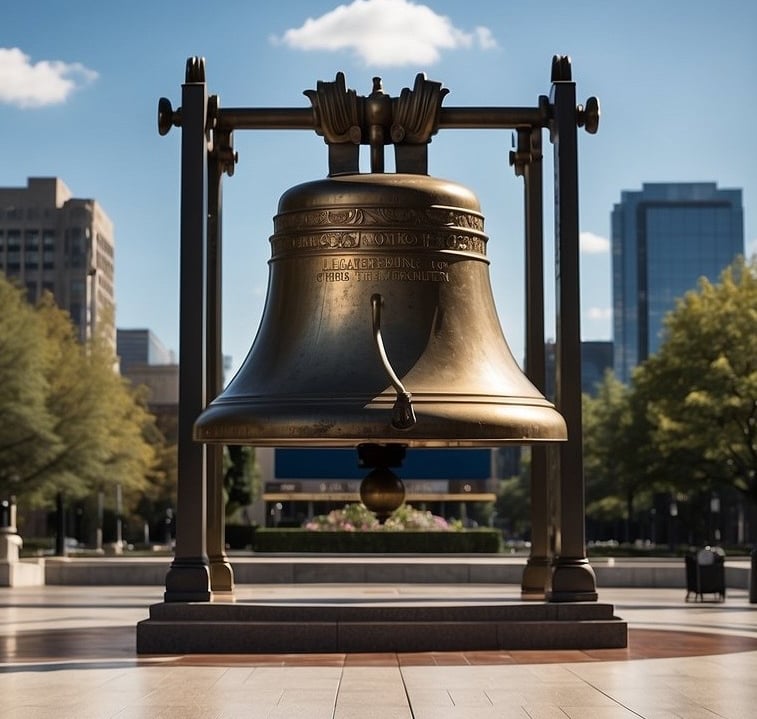
It could be argued as the United States approaches its two-hundred-and-fiftieth anniversary that its experiment in democracy has failed. Many historians would add that it wasn't a fair experiment to begin with: slavery, genocide, xenophobia, and all the rest of the grim list. Giant corporations grown here have so greatly amplified authoritarian mind control that they threaten the security of the entire world, a world overheating because of other powerful US corporations. The Liberty Bell was cracked shortly after it was cast, and it has never been repaired.
Rather than asking about failure or success, perhaps a different question might be more relevant: What would it take at this point to complete the American Revolution? To repair the Liberty Bell of democracy whose split runs through every heart in this troubled land?
For whatever changes a people decides are needed, values determine what those changes amount to. These values cannot remain on the surface: they must permeate all efforts, all institutions, and all aspirations, or they remain cover for the unscrupulous who throw words like "freedom" around in order to undermine what's left of it. Upon good lived values depends the integrity of every social arrangement.
The "keystone values" I propose keeping in mind all have roots in the history and foundation of the United States. None are pie-in-the-sky utopian. All are being implemented somewhere today. (I have also argued for a Declaration of Interdependence along similar lines.) Dr. Martin Luther King Jr. referred to values we need to rediscover and live.
What qualifies me to offer these values as worthy of realization? Two PhDs? Twenty years in academia? Ancestry in the US since 1630? No: just the fact of my being a concerned lifelong citizen of the US. That is the only qualification needed. In any real democracy, every concerned voice by every citizen who reflects on such important matters should receive a hearing.
We never really finished the American Revolution, just as we never finished the Civil War. The ideals of each were never fully implemented, nor were the wrongdoers ever held fully to account. I offer these, then, as a supplement to the Declaration of Interdependency as guidelines for good-hearted citizens engaged in the ongoing struggle for true liberty and equality.
10 Keystone Values for Completing the American Revolution:
Belonging. No one left behind, no one left out in the cold, no one facing bankruptcy because of unpaid medical bills. No one excluded from basic needs or from their full rights as a citizen of the United States.
Variety. Unity in diversity. E pluribus unum: "From many, one." No real unity is possible without differences and diverse voices, perspectives, and insights.
Worth. Each of us has infinite worth. No one is better than anyone else. Either each of us is a miracle of being or none of us is.
Care. An ethic of care for people, places, other beings, Earth. That which violates care is harmful; that which supports care is healthful. A person who goes out in public with an illness harmful or fatal to others is a public menace. Our rights only matter in relation to other people's. Rights are inherently relational.
Accountability. Equal justice for all, legally, financially, and politically. No one who commits a crime should receive special treatment. No large business should pay less in taxes than citizens have to pay. Let fairness ring.
Education. It's impossible for citizens or citizen leaders to make good decisions without an adequate education. A nation should fund what its survival depends on.
Democracy. We need participatory leadership: leaders who represent We the People. "Leadership" that disempowers people is rulership in disguise. An emotionally immature politician who lies or makes irresponsible decisions should be removed from office immediately and replaced with someone responsible.
Creativity. Creativity is more than a product or process: it is part of our nature as reflected in a nation's support for the arts and humanities, which tell us what matters in life beyond mere utility.
Peace. Negotiation is nearly always more effective than escalation. Military action not in direct, demonstrable, and urgent defense is a crime against humanity. Peace is the way.
Vision. We need to remember how to dream where to go together. No other way to get there.
"We are caught in an inescapable network of mutuality, tied in a single garment of destiny. Whatever affects one directly, affects all indirectly. Never again can we afford to live with the narrow, provincial 'outside agitator' idea. Anyone who lives inside the United States can never be considered an outsider anywhere within its bounds."
―Dr. Martin Luther King, Jr., "Letter from a Birmingham Jail" (1963).